" height="19.593489627012634px" id="HZMnoshln" transform="translate(35.667 1.777)" width="65.54152709402429px"/><path d="M 0 0.017 C 2.315 0.103 4.878 -0.071 7.193 0.036 C 7.468 0.279 12.481 5.793 12.556 5.958 C 11.717 6.005 10.736 5.956 9.888 5.958 C 8.409 5.961 6.923 5.977 5.446 5.957 C 4.793 5.44 4.259 4.69 3.684 4.077 L 1.651 1.879 C 1.049 1.235 0.525 0.741 0 0.017 Z" fill="rgb(12, 241, 145)" height="5.978734113643265px" id="B_ZyWaY8J" transform="translate(12.847 17.922)" width="12.556331656472807px"/><path d="M 18.85 0 L 25.936 0 C 24.823 1.198 23.694 2.514 22.583 3.726 L 11.098 16.3 L 7.002 20.802 C 6.307 21.56 5.61 22.392 4.847 23.07 C 3.802 23.997 1.958 23.832 0.982 22.861 C 0.429 22.31 0.203 21.736 0 20.995 L 0 4.033 C 0.736 4.729 1.513 5.612 2.204 6.369 L 5.127 9.559 C 5.157 10.119 5.127 10.896 5.126 11.475 C 5.128 12.703 5.12 13.932 5.101 15.16 C 5.602 14.614 6.075 14.035 6.574 13.485 L 11.831 7.736 C 14.119 5.193 16.502 2.478 18.85 0 Z M 60.302 6.916 C 61.496 6.907 62.723 6.937 63.927 6.935 C 62.687 10.72 61.245 14.453 59.866 18.186 C 59.324 19.656 58.713 21.843 58.009 23.157 C 57.54 24.036 56.936 24.913 56.037 25.37 C 55.493 25.647 54.887 25.798 54.297 25.935 L 52.098 25.935 C 51.91 25.715 52.001 23.361 51.992 22.874 C 54.16 22.932 54.67 22.721 55.309 20.461 L 52.023 11.377 C 51.506 9.944 50.881 8.391 50.444 6.937 C 51.689 6.941 52.935 6.933 54.181 6.913 C 54.393 7.343 54.775 8.624 54.941 9.14 C 55.392 10.543 55.864 11.949 56.361 13.336 C 56.62 14.057 56.993 15.495 57.285 16.127 C 57.802 14.421 58.424 12.752 58.95 11.029 C 59.213 10.164 59.955 7.668 60.302 6.917 Z" fill="rgb(255, 255, 255)" height="25.9350729038176px" id="RJr52Ozxy" width="63.92682320478577px"/></g></svg>)
Blog
The Top 5 Challenges of Integrating KYC APIs (According to 5 Senior Compliance Leaders)
Author
The Kyckr Team
Published
When obliged entities are building their own KYB system in-house, they usually connect to a mix of third-party data aggregators and official company registers.
Having accurate data is essential. According to Kyckr’s findings, 68% of UK AML fines imposed by the Financial Conduct Authority (FCA) between 2020 and 2025 were caused by failures in obtaining accurate, fresh and authoritative company data.
But obtaining accurate data isn’t easy. For a few reasons.
The usability, accessibility, and searchability of company registers differ widely.
By speaking to 5 Kyckr customers, we identified 5 main issues that plague banks, law firms and fintechs when they try to connect to company registers via API.
The Regulatory Imperative of Live Data Connections
Regulators like the UK’s Financial Conduct Authority (FCA) increasingly demand that financial institutions and other obliged entities obtain and maintain fresh, accurate customer records.
Kyckr investigations revealed that 68% of British AML fines were caused – directly or indirectly – by low-quality data, incomplete company information, and a failure to even obtain company filings from registries.
£630 million in fines over 5 years.
The trouble? Connecting to registries isn’t easy. Firms are caught between two contradictory forces: the demands of regulators and the complexity of the registry system.
[caption id="" align="alignnone" width="1776"]
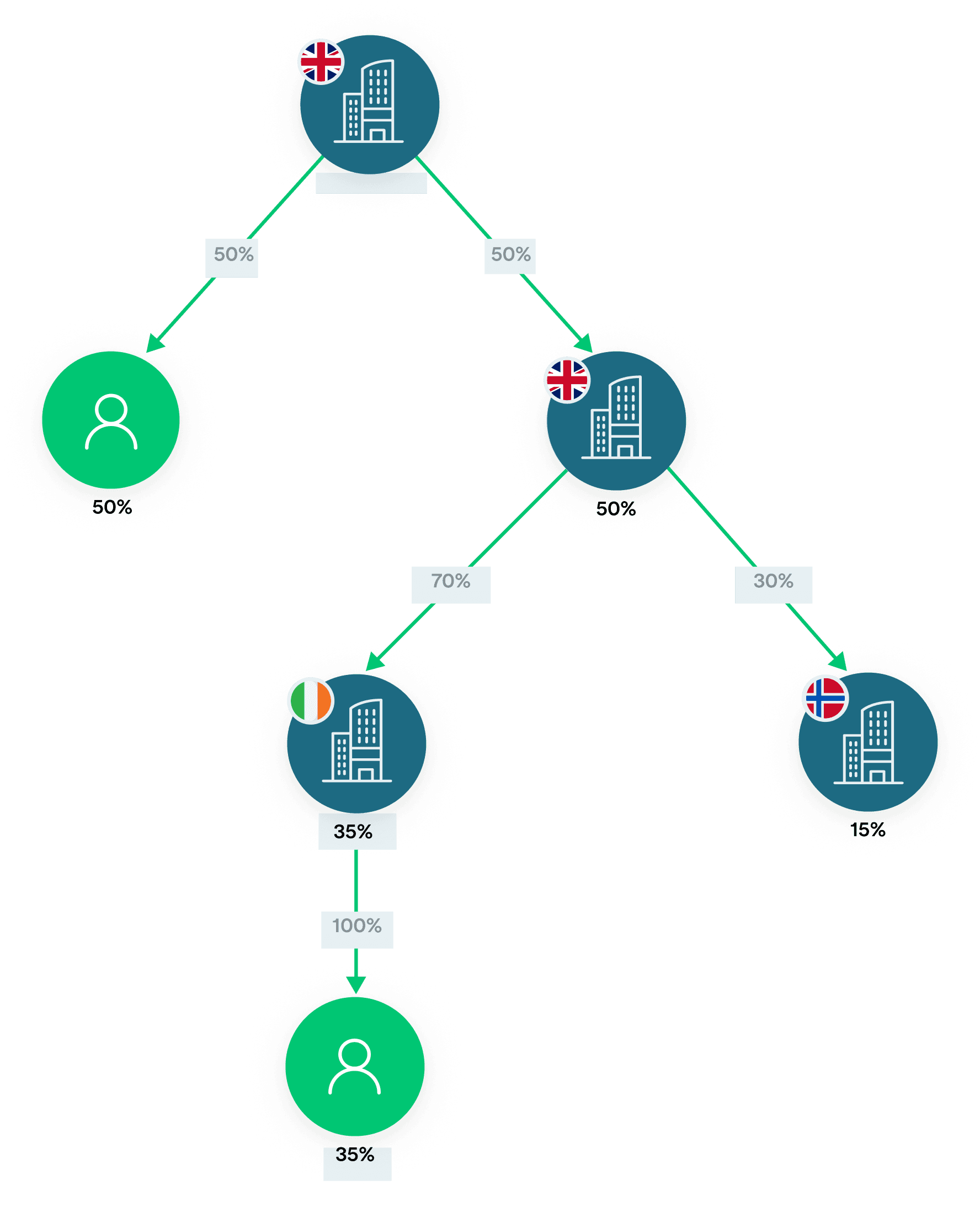
A UBO Verify report [/caption]
The 5 Challenges of Getting Official Company Registry Information
1. Multi-Jurisdictional Complexity
UBO verification was the number one priority for all five customers. The problem? It requires cross-border capabilities.
The corporate management firm explained, “You might have the following:
A Luxembourg holding company.
Owned by a Jersey entity.
Which is owned by investors in various countries.”
As they said, “Building that picture requires patience and multiple data sources.”
Therein lies the problem. As the corporate management firm noted, “Some registries are more accessible than others. Somewhere like the Netherlands’s KVK is straightforward, but information is hard to get in some Asian or South American jurisdictions.”
2. Data Quality
Every register differs in the quality of the data they hold.
Bad Data: Two customers estimated that between 5-7% of company registry data is misleading, either through negligence or deliberate misreporting by the entities concerned.
Limited Verification: This is because few registries verify the information submitted to them – for example, cross-referencing data from other government sources or verifying identities of beneficial owners.
Discordant Data: Most registries don’t follow universally applied data formats, which requires in-house KYB systems to ingest, normalise and structure the data accordingly.
The trade finance firm highlighted this. “Data got better with the Economic Crime Bill and Transparency Act,” he said, pointing out the fact that the UK’s Companies House now verifies the identities of directors.
3. Differences in Accessibility
The global company registry network is incredibly diverse in terms of how easy it is to access individual registries.
Jurisdictional Limitations: Certain company register APIs can only be accessed by residents (Italy, Hong Kong).
Language Barriers: Many company registries are only available in the local language, such as in France.
The payment infrastructure provided put it like this: “The Companies House equivalents in those countries are not always readily available, and some are paid for. Sometimes it's very difficult. You need to register or be a citizen of that country to access it.”
4. Usability Issues
Kyckr customers also pointed out that company registries differ on how usable they are.
Paid vs Free: Some registries offer pay-per-query APIs; others are free or require a subscription.
Registry Speed: One of the most oft-cited problems. Some registries take several days, even weeks, to send the correct documents. Others provide them instantly.
Manual Processes: While registries are increasingly adopting APIs and offering bulk data sets, this remains the exception.
The biggest problem? Training KYB teams to navigate these differences.
Case Study
The law firm:
Was familiar with Companies House, but not the official registries of France, Germany, Hong Kong or Singapore.
Has 20 business analysts, plus the usual annual turnover.
This required endless training of staff in registry knowledge.
“Having to build up a level of knowledge in all those different databases, even if you get past the logistics of signing up, would have been a constant training process.”
In contrast, Kyckr provides one access point to 300 company registries – all accessible in one structured, normalised format. Teams need only be trained to navigate one system, not multiple.
5. The Cost of Multiple Integrations
Setting up API integrations to multiple registries doesn’t make business sense for an obliged entity whose customers mostly come from one jurisdiction.
The law firm said, “When we first looked into this, it was a bit overwhelming. We said, ‘Are we going to have to sign up for 300 registries?’ You know, with 30 people in the department – think of the logistics behind that.”
The average API: Takes up to 3 weeks to set up.
Multiply that by the number of registry connections you need: that’s needless expenditure of time, money, and resources. You must redirect backend developers to integrate the connections into your KYB workflows, preventing them from developing your product.
Compare that with theKyckr API, which takes just several days to integrate.
[caption id="" align="alignnone" width="3000"]
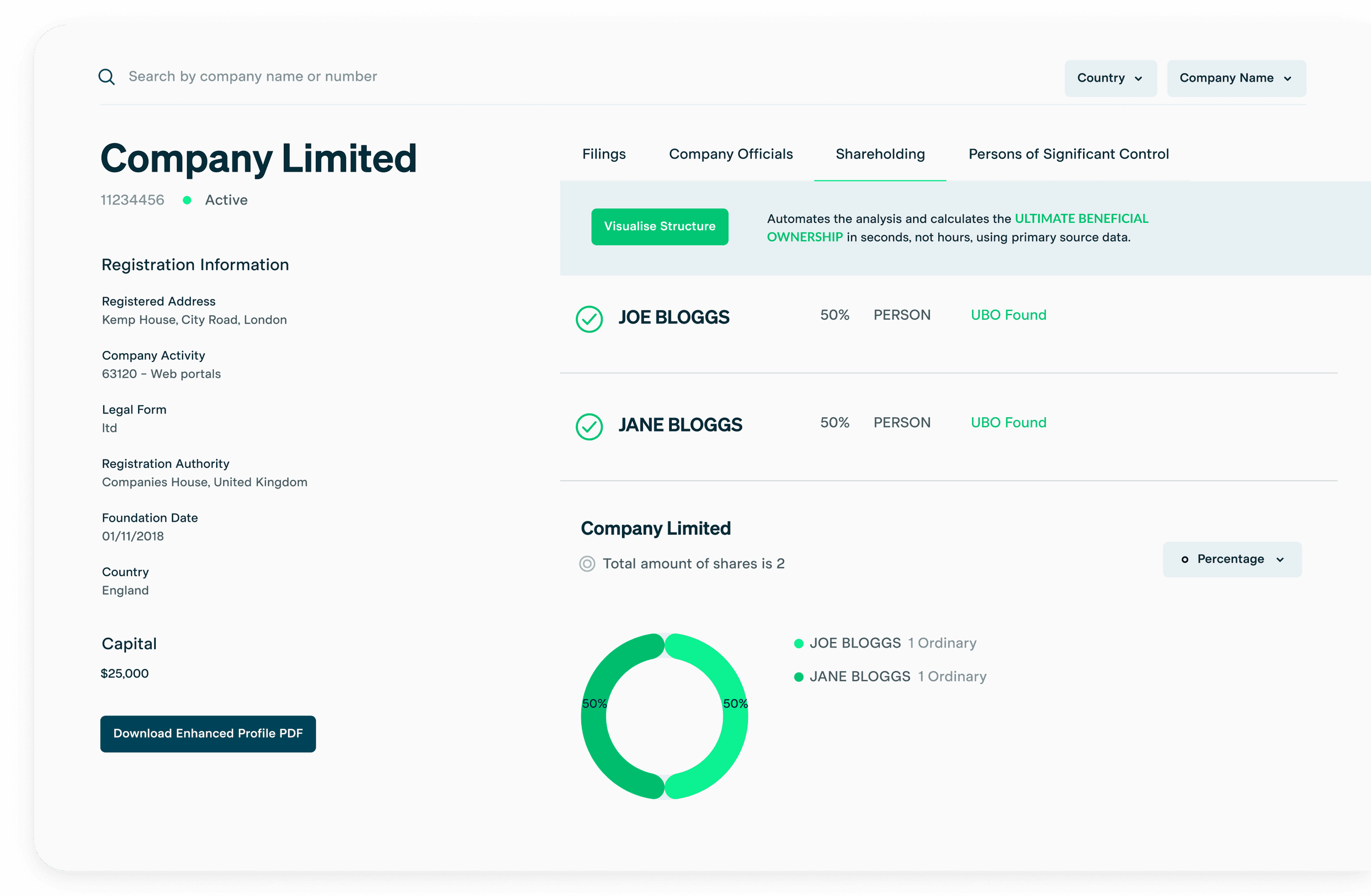
The Kyckr Portal [/caption]
What Kyckr Solves
Multi-Jurisdictional Complexity
Kyckr provides instant access to 300+ official company registries in real time.
“Kyckr provides everything we need,” said the payment infrastructure provider. “It's a one-stop shop for any kind of company. Details are probably the most comprehensive I've come across, anyhow and easy to use."
Best of all? It incorporates 300+ company registries in one place. “It saves us having to have accounts and log into various platforms,” said the law firm. “Particularly in instances where we might have a single case that requires registry information from three different jurisdictions."
Hard-to-Reach Jurisdictions
Kyckr has spent nearly 20 years setting up access points to hard-to-reach jurisdictions across the world, setting it apart from its competitors.
The trade finance firm put it like this: "You guys are pretty good when it comes to those weird registries, like Italy,” he said. “I had to do a KYB the other day on some kind of European companies, and one of the shareholders was owned by a kind of an Italian investment vehicle, and Kyckr managed to pull that information out nicely."
Not just Italy. Kyckr provides live access from the British Virgin Islands to China.
Audit-Proof
Kyckr provides a single access point to ordering company documents from hundreds of official company registries.
That means no juggling multiple carts, registries, and payment systems: just one.
"I think you're the best source to obtain documents,” said the corporate management firm. “Using one platform for us really makes it more efficient."
So, when you’re sourcing from Kyckr, you’re in fact sourcing directly from the registries themselves – in real time.
The law firm said, “From a regulatory standpoint, if someone said, 'How did you get this?’ we can say we got this directly from the company registry, not from some lawyer via email,” which itself is fraught with potential accusations of bias.
A global bank said, “French regulators are supportive of the documents fetched from Kyckr, and that is the primary reason why we are associated with you.”
Kyckr Provides One Live Access Point to 300+ Company Registers
We know how difficult it is to consolidate multiple company register APIs into one unified KYB solution.
After all, we’ve been doing that since 2007.
Setting up access points, dealing with different language requirements, training teams – it’s a needless expenditure of time, capital, and manpower.
Kyckr’s already done it, providing live access to 300 official company registries worldwide.
Methodology
We spoke to senior compliance professionals from 5 Kyckr customers – UK-registered obliged entities – about the challenges of using official company registries.
For the purposes of looking at the full breadth of AML obligations and workflows, we chose:
A trade finance company.
Corporate management firm.
Law firm.
Banking infrastructure provider.
Global bank.
We have anonymised their names to protect privacy and encourage candour.